Test Cricket at TIO Stadium
For the first time in 22 years, Test cricket came back to the Northern Territory. In August 2026, Australia hosted Bangladesh at Marrara Stadium in Darwin, and the cricket world was watching.
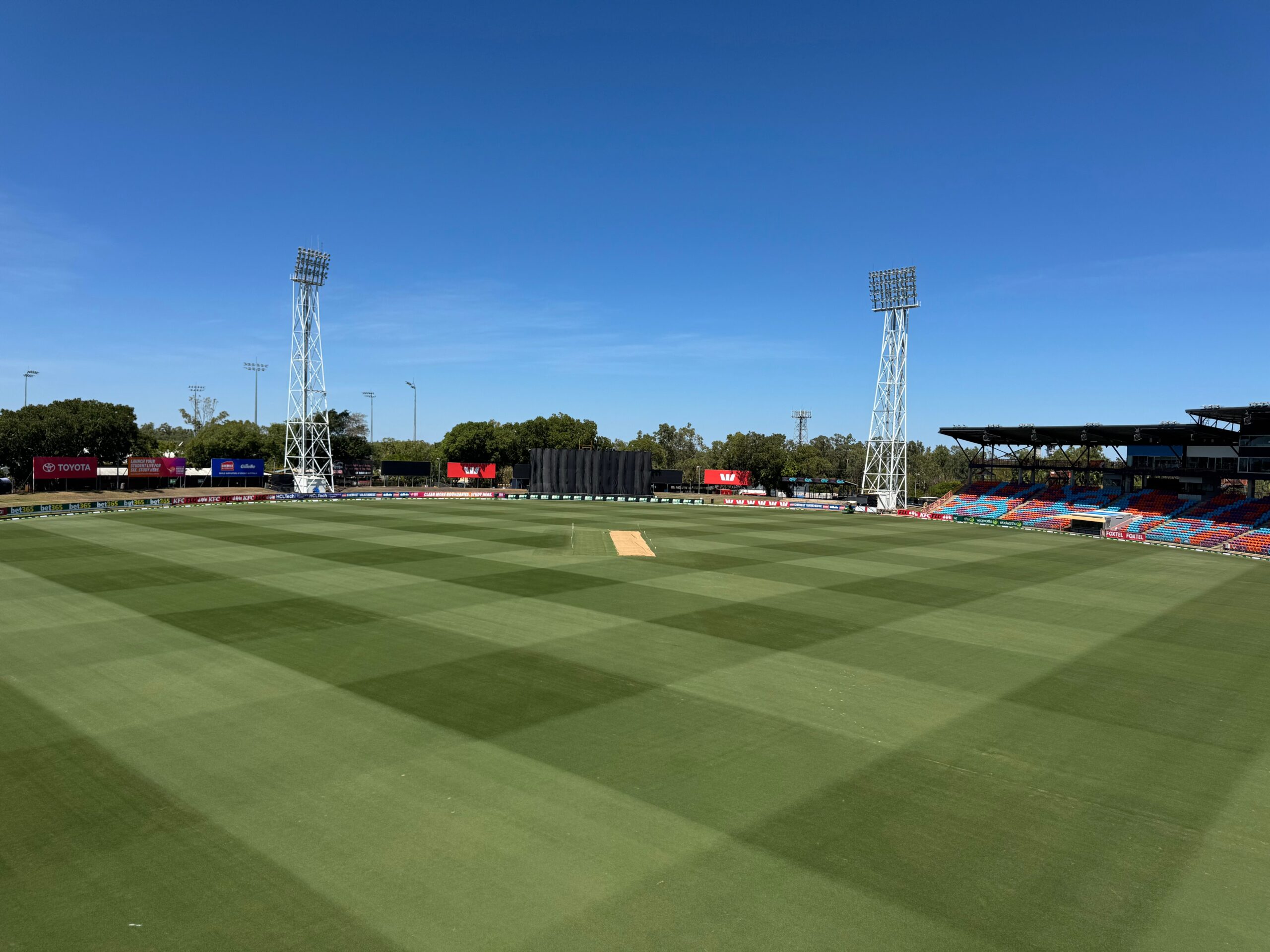
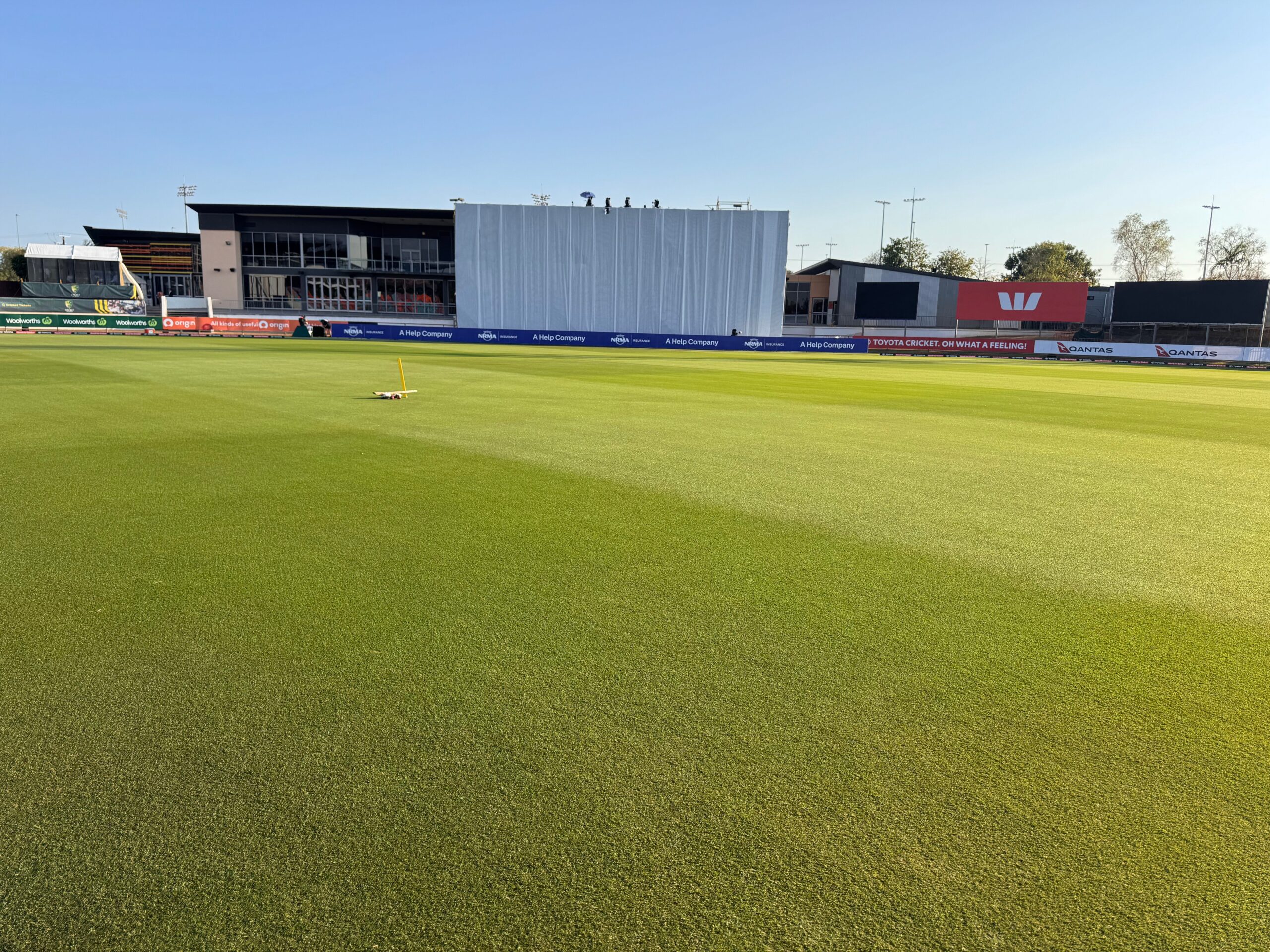
Thirteen weeks earlier, the same ground had looked very different. On 15 May it hosted the Gold Coast Suns and Port Adelaide in the AFL, with the grass cut for football at 18 mm. Our field maintenance and surrounds team had from that final siren until the first ball of the Test to turn a football oval into an outfield fit for five days of international cricket. Our job was the outfield. The centre wicket was prepared by NT Cricket’s own curators, and the two teams worked side by side all the way to the first ball.
The first opponent was the weather. Darwin’s dry season brings day after day of dry heat, so getting soil moisture exactly right was critical. Too little and the outfield would scorch; too much and it would play slow and soft.
Under the surface, fairy ring and hydrophobic patches were already a problem, with soil that sheds water instead of soaking it up. And there was a catch. To keep the surface firm and fast, the plan was not to water for about eight days if the Test went the full five. Every wetting agent and fungicide application had to be timed so the outfield could survive that stretch on its own.
The schedule was tight too. Because of the time difference, play started half an hour earlier than a usual Test, which shortened the game-day window for cutting. And in the lead-up, the ground was shared with team training, media commitments and NT Cricket’s work on the wicket.
The transformation started straight after the AFL match. Over the following weeks, the team gradually lowered the height of cut from 18 mm to 8 mm, then let the grass grow back to 10 mm. Doing it in stages let the surface settle without stressing the turf, and allowing a little leaf back gave the plant more strength for the heat ahead.
The nutrition program didn’t change through the switch from AFL to cricket. Keeping it steady meant the turf went into Test week healthy and even, without sudden flushes of growth.
To time the wetting agents and fungicides, the team worked backwards from day five. Treatments were placed so the fairy ring and dry patches stayed under control and the soil held enough moisture to get through the planned eight days without irrigation.
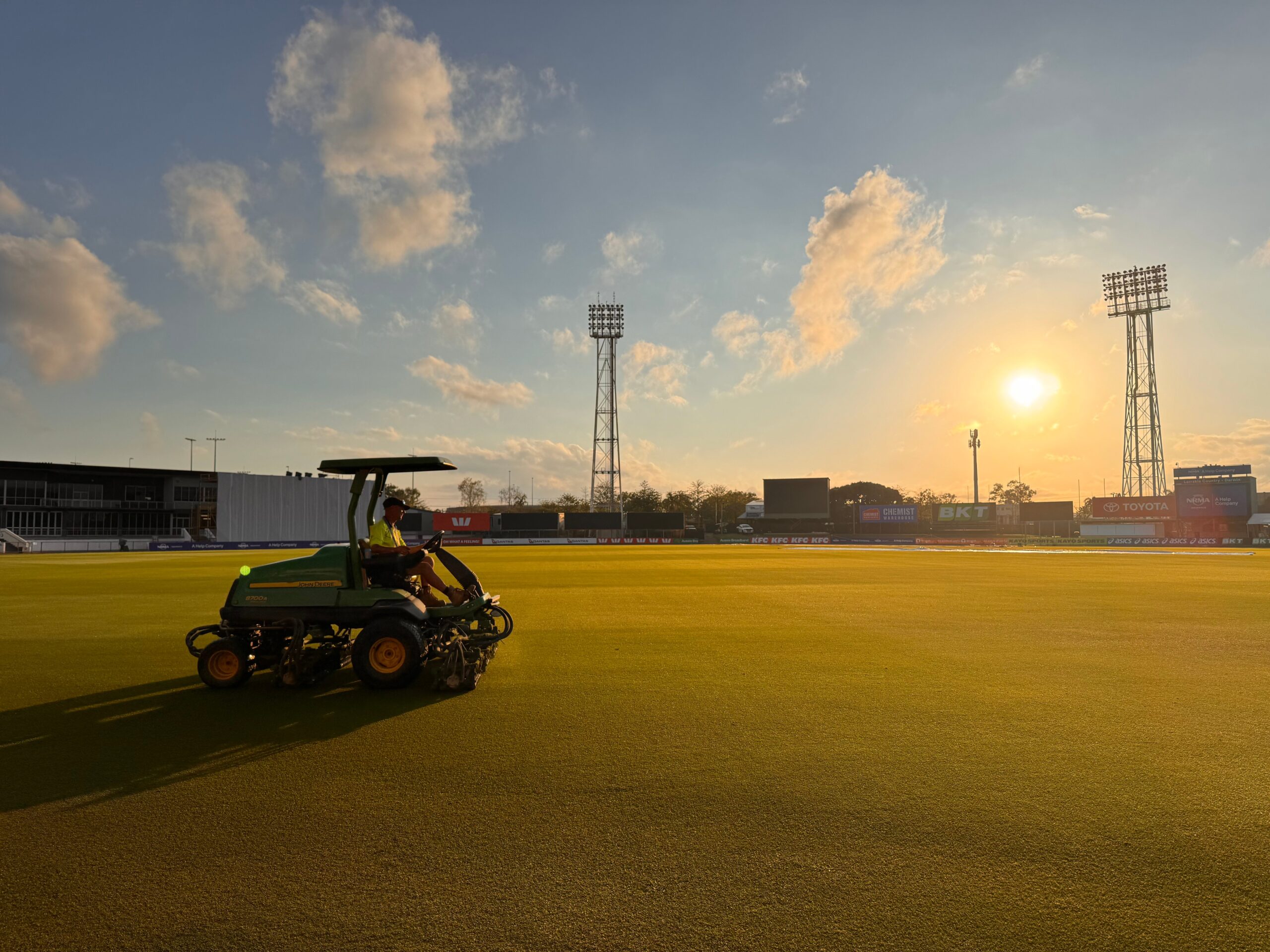
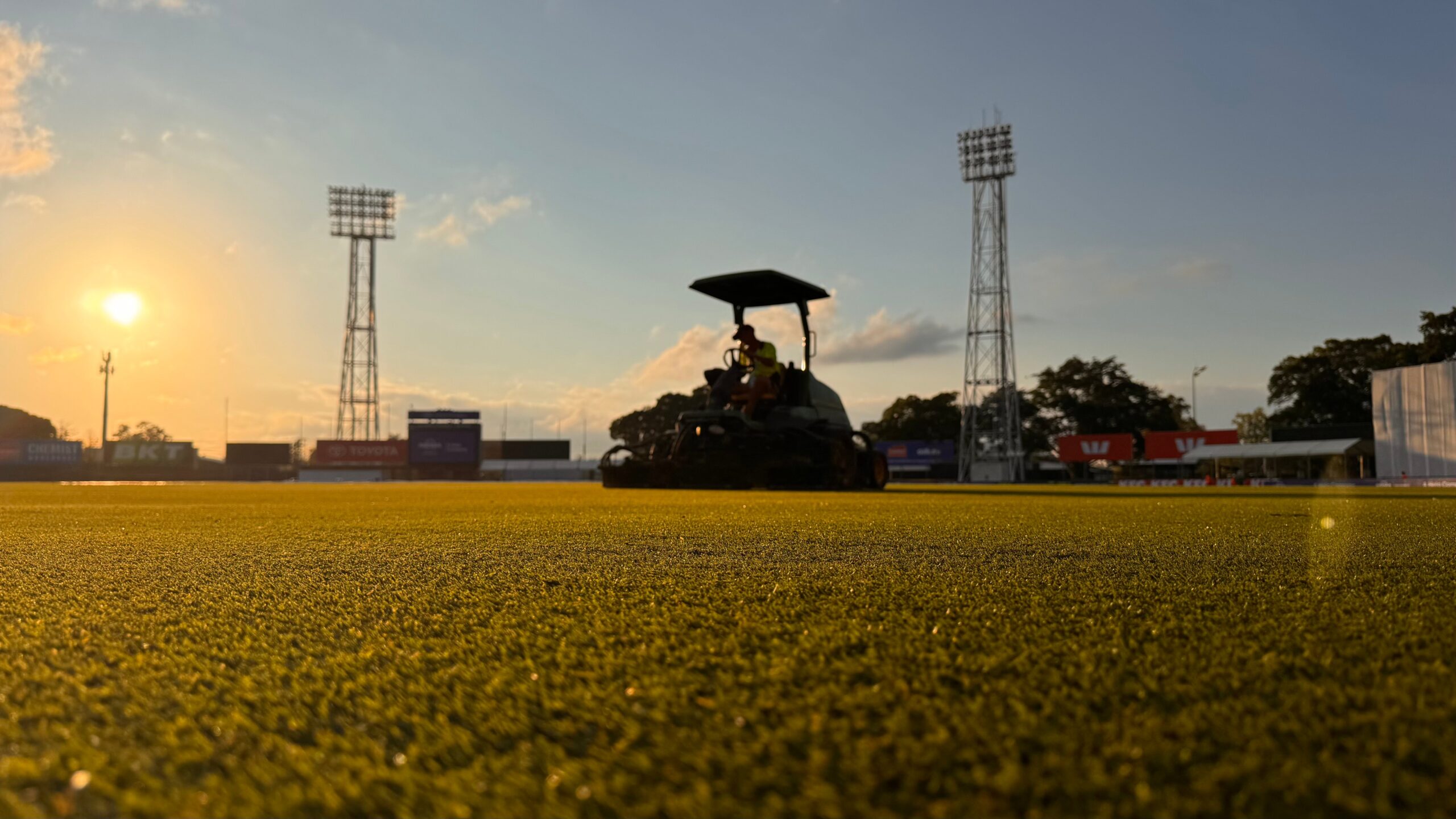
Preparation also meant sharing the ground. Our work was rearranged around team training, media sessions and NT Cricket’s wicket preparation. On some days we cut in the morning, handed the ground over for wicket work and media, then came back at night to spray.
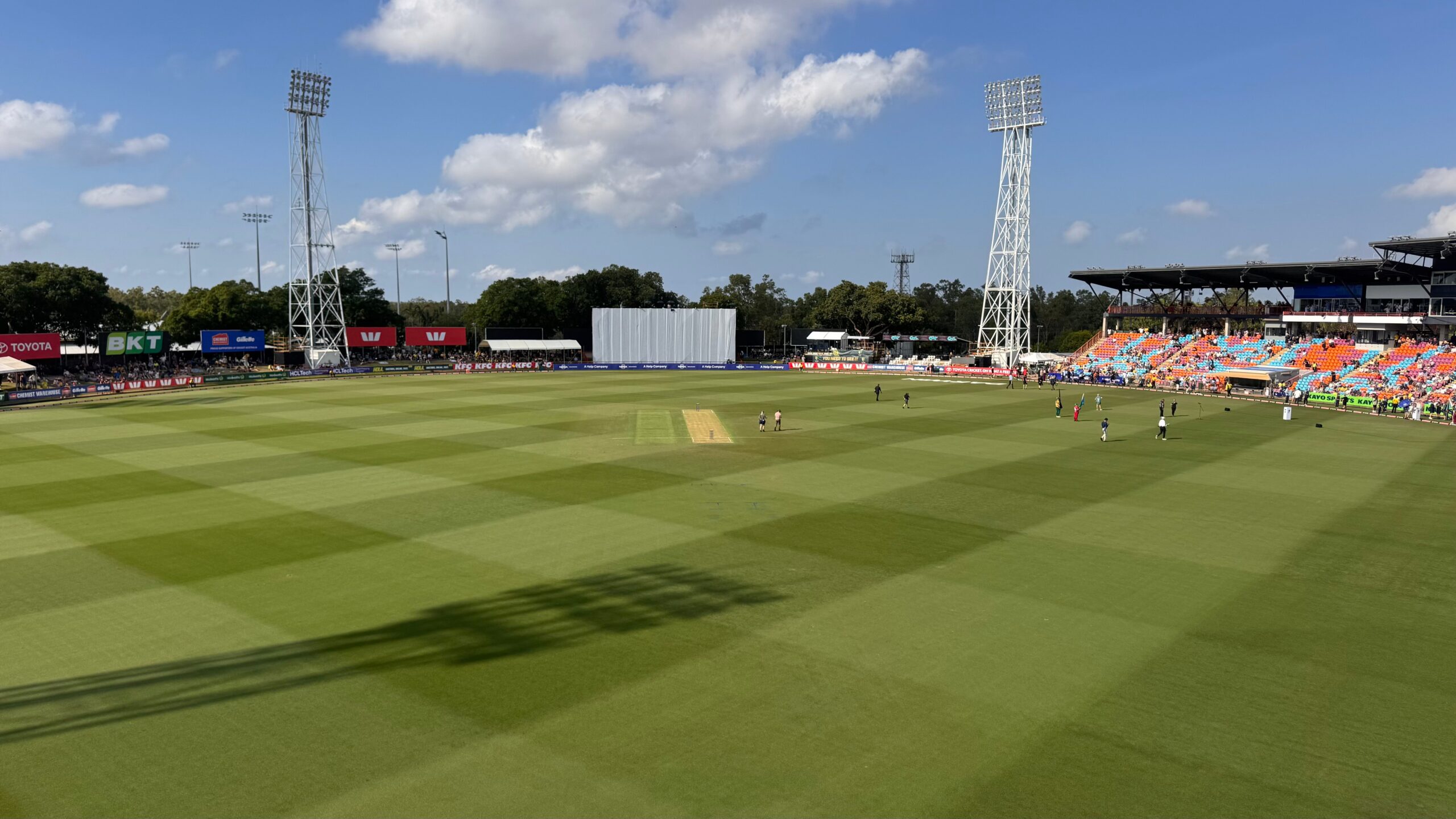
The finishing touch was the cut. The outfield was double cut in two directions to create the diamond pattern seen on the broadcast. On match days, cutting was shared across the team to fit the earlier start, and one staff member stayed on hand to help NT Cricket with anything they needed.
The whole plan was built around using less water, not more. With wetting agents helping the soil absorb and hold moisture, the outfield was set up to go about eight days without irrigation during a Darwin dry season. Fungicides and wetting agents were applied to a planned schedule, not reactively, and the nutrition program stayed steady instead of being pushed for a quick result.
Key numbers: First Test in the NT in 22 years · 13 weeks from AFL to Test cricket · height of cut 18 mm to 10 mm · all 5 days played on one preparation · about 8 days without irrigation
The outfield lasted all five days. Only on the final day did a few dry patches begin to show, right at the end of the period the plan was designed to cover.
The praise for the outfield came from every direction: players, umpires, commentators and venue staff. Mark Waugh said it was the best outfield he had ever seen. From a former Test player who has seen grounds all over the world, there’s no stronger review.
“The immaculately manicured outfield, offering a playing surface that was nigh on pristine, had already been praised for its lawn-like quality.” – ABC News
“On Fox Cricket, Mark Waugh remarked the outfield at the ground was so good it could host a game of lawn bowls.” – NT News